

Trucking Conditions Index (TCI) surged to 9.3 in January 2026
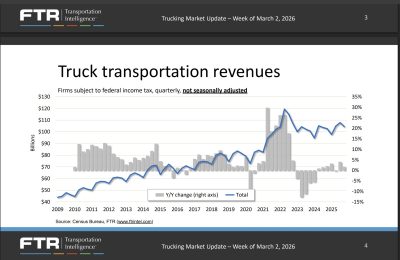
The numbers are in, and for the first time in a long while, the outlook for truck fleet operators is looking decidedly “green.” According to the latest data from FTR Transportation Intelligence, the Trucking Conditions Index (TCI) surged to 9.3 in January 2026, up significantly from December’s 4.85.
This isn’t just a minor fluctuation; it’s the highest reading the industry has seen since February 2022. For fleet owners who have spent the last few years navigating a “freight recession” and stagnant rates, this shift signals a robust turn toward more profitable market conditions.
Breaking Down the 9.3 Reading
The TCI is a consolidated metric that tracks the health of the U.S. truck market based on five key variables: freight volumes, freight rates, fleet capacity, fuel prices, and financing costs.
In January, three of those pillars—freight rates, volume, and utilization—showed significant strength. When the TCI approaches double digits, as it is doing now, it suggests that the operating environment is shifting from “neutral” to “significant change.” For carriers, that change is currently trending in their favor.
The Middle East Factor: A Double-Edged Sword
While the headline number is optimistic, there is a shadow on the horizon: rising diesel prices. Avery Vise, FTR’s Vice President of Trucking, pointed out that military operations in the Middle East are causing a surge in fuel costs.
In the short term, this will eat into the margins gained from better freight rates. However, Vise notes a strategic silver lining for established fleets:
“That development arguably will tighten capacity further by forcing out many of the weakest players… much stronger freight rates and rising utilization probably will keep most operations afloat.”
In essence, while the “pain at the pump” is real, it may serve to accelerate the “right-sizing” of the market, leaving more volume for the professional, well-managed fleets that can weather the volatility.
Industrial Recovery vs. Consumer Stress
The “recovery” isn’t hitting every sector equally. If your fleet is tied to the industrial sector, the outlook is particularly bright. Economic indicators suggest a manufacturing rebound is underway, providing a steady floor for freight demand.
However, fleets heavily dependent on consumer goods may face a bumpier road. Why?
-
Persistent Inflation: Consumers are still feeling the pinch at the grocery store.
-
Rising Gasoline Prices: Higher costs at the pump leave less discretionary income for the goods that fill dry vans.
-
Tight Cash Reserves: After years of high interest rates, the average consumer’s “rainy day fund” is looking thin.
What Should Fleet Operators Do Now?
With the TCI signaling a solid longer-term recovery, now is the time to pivot from “survival mode” to “optimization mode.”
-
Lock in Rates: With freight rates firming up, look for opportunities to secure more favorable contract terms.
-
Monitor Utilization: High utilization was a primary driver of the January TCI jump. Ensure your dispatch and routing software are squeezed for every ounce of efficiency.
-
Fuel Surcharges: With the Middle East situation remainng volatile, double-check that your fuel surcharge programs are accurately reflecting current pump prices to protect your cash flow.
The road ahead looks more promising than it has in years. While fuel costs remain a headwind, the strengthening core market dynamics suggest that the trucking industry is finally shifting back into high gear.
Stay Ahead of the Curve: For a deeper dive into load volumes and capacity analysis, check out the full March issue of FTR’s Trucking Update. You can also stay updated weekly by tuning into the State of Freight podcast hosted by Avery Vise.

