

Geotab Report Identifies 2026 Fleet Safety Divide
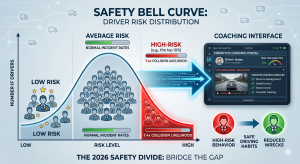
Understanding the New Safety Gap
For many years, fleet managers treated safety as a “one size fits all” problem. They gave the same training to every driver and hoped for the best. However, the Geotab 2026 State of Commercial Transportation Report (published February 2026) reveals that safety is not equal across the board. The data shows a major “safety divide” where a small group of drivers is causing most of the problems.
According to the report, the riskiest 10% of drivers are responsible for 20% of all fleet collisions. That means one out of every five crashes is caused by a very small slice of the workforce. Even more startling, these high-risk drivers are 7.4 times more likely to get into a wreck than their safer coworkers. For companies, this means that generic safety meetings are no longer enough. To truly lower crash rates, fleets must find a way to help the specific drivers who are most at risk.
The High Cost of the “Risky Ten”
The Geotab study points to specific behaviors that separate safe drivers from high-risk ones. The biggest “red flag” is speeding. The data found that severe speeding—going 20% or more over the limit—causes a massive jump in danger. In fact, if a driver speeds like this, their chance of a collision increases sevenfold within just five seconds.
This narrow window of time is why traditional safety reports don’t work as well as they used to. If a manager waits until the end of the week to tell a driver they were speeding, the risk has already passed. High-risk drivers often develop habits that lead to these “near-miss” moments every day. Because they are 7.4 times more likely to crash, these drivers drive up insurance costs and repair bills for the entire company.
Bridging the Gap with Predictive Coaching
To close this safety divide, fleets are moving toward something called “Predictive Coaching.” Instead of giving everyone the same lesson, AI-powered tools look at real-time data to see which drivers need help right now. This technology acts like a digital coach that rides along in the cab.
When the system sees a high-risk behavior like tailgating or severe speeding, it provides an instant alert. This helps the driver fix the mistake in the moment. The Geotab report found that active users of these safety tools had nearly 29% fewer collisions than those who didn’t use them. By targeting the specific habits of the riskiest 10%, companies can turn high-risk drivers into safe ones and bridge the safety gap for good.
Reference Links:
Also read: Using Dash Cam Data for Driver Coaching

