

CSA Scores: What New Fleet Managers Must Know Now
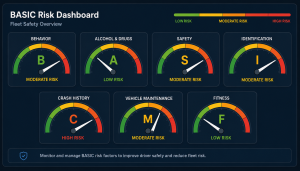
CSA scores are one of the most talked-about topics in commercial trucking. They are also one of the most misunderstood. As a new fleet manager, understanding how CSA scores work is not optional. Ignore them long enough, and you will hear about it from your insurance company first.
What CSA Actually Stands For
CSA stands for Compliance, Safety, Accountability. It is a safety measurement system used by the Federal Motor Carrier Safety Administration (FMCSA) to identify motor carriers and drivers that pose elevated safety risks. The program launched in 2010 as a replacement for an older system called SafeStat. The goal was simple: catch dangerous patterns before they become crash statistics. FTSGPS
A CSA score reflects a carrier’s safety performance across specific categories called BASICs — Behavior Analysis and Safety Improvement Categories. Each carrier is ranked from 0 to 100, with lower scores being better. Scores are based on data collected over the past two years and compared to other carriers of similar size and operation type. Mercer-trans
So your score is not a grade out of 100. It is a percentile ranking. That distinction matters enormously.
Reading Your Percentile the Right Way
Here is where new managers make an expensive mistake. Fleet managers often misread CSA percentiles as grades, thinking 80 is a good score. It is the opposite. In the SMS system, higher is worse. An 80th percentile means you are in the bottom 20% of your peer group. Foley
Think of it like a class rank where you want to be at the front of the line, not the back. A percentile of 20 means you are outperforming 80% of similar carriers. That is exactly where you want to be.
The Seven BASIC Categories
The FMCSA’s Safety Measurement System analyzes a carrier’s performance in seven BASICs: Unsafe Driving, Hours of Service Compliance, Driver Fitness, Controlled Substances and Alcohol, Vehicle Maintenance, Hazardous Materials Compliance, and Crash Indicator. Simply Fleet
Each BASIC measures a different area of your operation. Vehicle Maintenance, for example, covers brake defects, tire issues, and lighting problems. Unsafe Driving covers speeding, distracted driving, and improper lane changes. Each violation adds points to your score. The more severe or recent the violation, the heavier the impact. Recent violations weigh more heavily than older ones. Mercer-trans
What Happens When Your Score Gets Too High
The higher your percentile, the greater the likelihood of FMCSA intervention — from warning letters to on-site audits. Carriers with high CSA percentiles also face more DOT roadside inspections. More inspections mean more downtime, which directly costs money. Intellishift
Beyond inspections, your score affects your bottom line in another way. Insurance underwriters pull these numbers and use them to set your premiums. They do not call to give you a heads up first. Poor CSA percentiles can also damage your reputation with shippers and brokers who check public safety data before awarding freight contracts. Foley
How to Challenge Errors in Your Score
Violations on your record are not always accurate. Therefore, the FMCSA offers a dispute system called DataQs. If a DataQs challenge is upheld, the FMCSA updates the SMS data. Challenging a recent inspection is far easier than disputing one that is two years old. Video evidence dramatically increases your success rate in crash disputes. FTSGPS
If a dashcam captured an incident, submit that footage. Be specific about the exact error in the inspection report. Vague challenges rarely succeed.
The Habit That Protects Your Score
Monitor your SMS results monthly. Address root causes of violations in each BASIC and prevent new ones through robust safety programs. You cannot fix a score overnight. The rolling 24-month window means past violations stay on your record. Consistent, proactive compliance is the only real strategy. FleetCollect
Start reviewing your FMCSA Safety Measurement System data at https://ai.fmcsa.dot.gov/SMS. It is free, publicly available, and the same data your insurers and shippers are already looking at.

