

Fuel Card Programs 101: Control Costs at the Pump
Every gallon of diesel your drivers buy is a transaction you either control or you don’t. Without a fuel management system in place, cash and general-purpose credit cards leave you with almost zero visibility into what was bought, where, by whom, and whether it was even for one of your trucks. Fleet fuel cards fix that — and then some.
If you are new to fleet management, setting up a fuel card program is one of the highest-value, lowest-effort improvements you can make in your first year. The mechanics are simple, the savings are real, and the controls you gain are substantial.
What a Fleet Fuel Card Actually Is
A fleet fuel card is a specialized payment card built specifically for commercial vehicle operators. It looks like a credit card, but the similarities end there. Unlike a standard credit card, a fleet card requires a driver PIN, vehicle ID, or odometer reading before a transaction is approved. Every purchase generates a structured data record tied to a specific driver, vehicle, fuel station, date, and gallon amount — automatically, with no manual entry required.
Most cards also restrict purchases by product type. That means a card set to diesel-only will automatically decline a gasoline purchase at the pump. Cards can also block convenience store merchandise, limit daily gallons, restrict fueling to certain hours, or allow use only in specific geographic regions. According to WEX’s fleet card security guide, these controls are what truly separate fleet cards from consumer cards — they stop unauthorized spending before it happens, not weeks later on a statement.
Why Fuel Fraud Is a Real Problem
It is tempting to assume your drivers are all honest — and most of them are. However, fleet fuel fraud is widespread and often goes undetected for months. Fuel card skimming, personal vehicle fill-ups, shared PINs, and inflated odometer readings are all documented methods of misuse.
According to FleetRabbit’s 2026 fuel card controls analysis, industry estimates suggest that 19 to 22 percent of fleet fuel spend is lost to theft and fraud each year. For a fleet with a $500,000 annual fuel budget, that could mean $95,000 to $110,000 walking out the door. Furthermore, card skimming incidents grew 70 percent year-over-year from 2022 to 2023, according to the same source, making physical card security an ongoing concern.
The controls built into a good fuel card program directly address these risks. Driver PIN requirements mean every purchase is traceable to a specific individual. Per-transaction gallon limits prevent over-fueling schemes. Time-of-day restrictions block purchases made outside normal operating hours. Together, these features create a layered security system that deters misuse without adding friction for legitimate transactions.
Understanding the Rebate Structure
Beyond controls, fuel cards offer per-gallon rebates that can meaningfully reduce your net fuel cost. However, not all rebate programs work the same way, and the published maximum is rarely what most fleets actually receive.
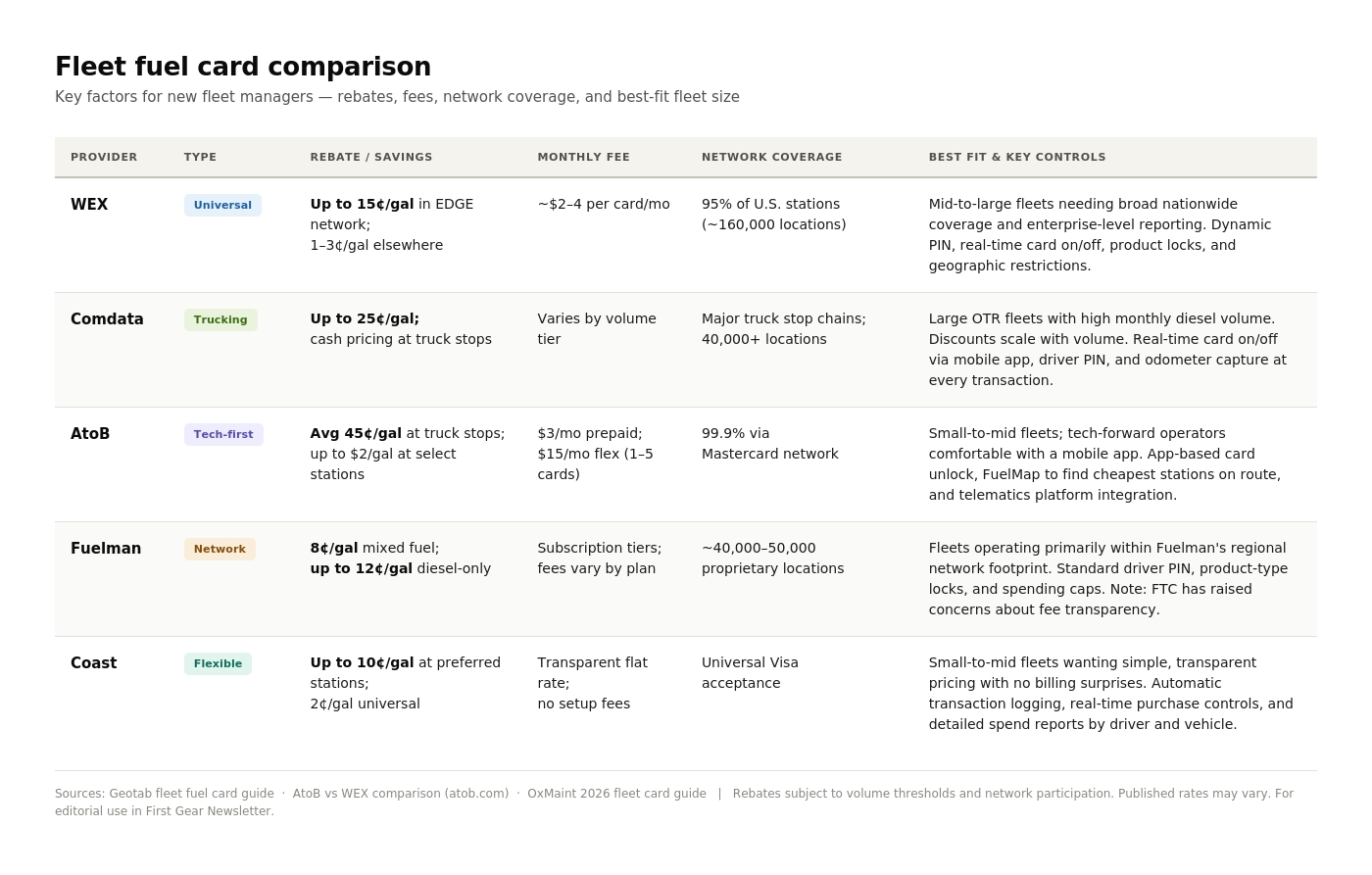
Rebates generally work in one of two ways. Network-based programs offer discounts at a defined set of partner stations, with higher rebates tied to total monthly gallon volume. Universal programs accept payment at nearly any fuel station but offer lower baseline discounts in exchange for broader coverage.
Your fleet’s monthly fuel volume and geographic operation area should drive the decision. According to Geotab’s fleet fuel card guide, the right card depends on your fleet’s size, typical fueling locations, and network needs. A small fleet that primarily fuels at one or two regular truck stops will benefit from a different program than a large over-the-road fleet fueling across dozens of states.
The comparison chart below breaks down how the major fuel card providers stack up on the key factors new fleet managers should evaluate.
Setting Up Your Controls the Right Way
Once you select a provider, the real work begins. Setting up your card controls thoughtfully from the start prevents problems before they happen. P-Fleet’s fuel card controls guide recommends starting with your vehicle’s tank capacity when setting per-transaction limits. Multiply the tank size by the average local diesel price, then add a small buffer for price fluctuations so cards do not decline at inconvenient times.
Assign a unique PIN to every driver — not every vehicle. This is an important distinction. Driver cards track who is fueling, while vehicle cards track which truck is being fueled. Using both together gives you the most complete audit trail. As Government Fleet’s fuel card security guide notes, without unique driver PINs, you cannot tie specific transactions to individual drivers when reviewing suspicious activity.
Set geographic restrictions based on where your trucks actually operate. A card that should only be used in the Southeast has no business approving a transaction in Nevada. Out-of-area purchases are a red flag worth catching in real time, not during your monthly statement review.
Pairing Fuel Cards with Telematics
A fuel card tells you how much was spent and where. A telematics platform tells you why. When you connect your fuel card data to your fleet management software, you can cross-reference transactions against real-time GPS location data. A fuel purchase that happens in Dallas when your truck’s GPS shows it in Houston is an immediate, automatic flag — no manual auditing required.
Platforms like Geotab, Samsara, and Motive all integrate with major fuel card providers, pulling transaction data into the same dashboard where you track driver behavior, maintenance, and compliance. This combination turns your fuel card from an expense management tool into a genuine cost reduction strategy. It also makes IFTA reporting — the quarterly fuel tax filing required for interstate commercial trucks — significantly easier, since mileage and fuel purchase data are already compiled in one place.
Exception Reporting: Your Daily Safety Net
Even with strong controls in place, you need a daily review habit. Most fuel card platforms offer exception reporting — automated reports that flag transactions falling outside your defined parameters. These might include purchases above the per-transaction limit, transactions outside approved hours, fuel types that do not match the vehicle, or purchases in unauthorized states.
According to Mansfield Energy’s fleet card security analysis, exception reporting shifts fuel card management from reactive to proactive. Instead of reviewing every transaction, you review only the ones that broke a rule. For a new fleet manager with limited time, that is a significant efficiency gain.
Set up your exception reports to arrive by email each morning. Make it a habit to review them before the day gets busy. Most anomalies have a legitimate explanation — a driver who fueled a different truck that day, or a price spike that pushed a transaction over the limit. However, the ones that do not have a clean explanation need to be addressed quickly.
Getting Started Without Overthinking It
Choosing your first fuel card program does not need to be a lengthy process. Start by answering three questions: How many trucks do I have? Where do they fuel most often? And how much diesel does my fleet buy each month?
Those three answers point you toward the right network coverage, rebate tier, and program complexity. Small fleets with predictable routes benefit from simpler, flat-rate programs with universal acceptance. Larger fleets with high monthly volume unlock better rebate tiers through programs like WEX or Comdata that reward volume with deeper per-gallon discounts.
Whatever you choose, get the controls right from day one. The rebates are nice. The visibility is better. The fraud prevention is where a fuel card pays for itself.
Also read: Stop Fuel Card Fraud Before It Costs You Thousands

