

The Hidden Costs of Aging Class 8 Fleets in 2026
Managing the Shift in Fleet Lifecycles
Running a profitable commercial fleet in 2026 requires strict attention to equipment lifecycles. Consequently, many operators are confronting the heavy financial burdens of running older equipment. Recent industry data reveals that over 58 percent of heavy-duty fleets currently operate Class 8 trucks from model year 2019 or older. However, keeping these older vehicles on the road creates massive exposure to safety violations and escalating expenses. Therefore, fleet managers must leverage modern technology to keep these assets safe, compliant, and cost-effective.
The Insurance and Compliance Burden
Nuclear verdicts and rising legal liabilities continue to pressure the transportation sector. As a result, insurance providers are heavily scrutinizing safety scores and telematics logs before offering coverage. Older trucks frequently suffer from unexpected component wear, which directly hurts Compliance, Safety, Accountability scores. Furthermore, regulators are preparing for the upcoming 2027 mandate that requires Automatic Emergency Braking on new heavy-duty vehicles. Although older trucks do not require a retrofit, running them without advanced driver assistance systems increases liability. Consequently, fleets must find alternative methods to prove their commitment to road safety.
Transitioning to Predictive AI Maintenance
Fleet maintenance directors are increasingly turning to artificial intelligence to close the gap on older equipment limitations. For instance, modern telematics platforms now embed conversational AI engines to analyze real-time engine health. These smart systems can identify minor faults before they trigger severe diesel exhaust fluid derates or on-road breakdowns. Additionally, automated workflows reduce the time assets spend in repair shops by diagnosing root causes instantly. Maintenance teams can now query their live data to predict part failures weeks in advance. Thus, predictive maintenance changes the dynamic from reactive firefighting to strategic uptime planning.
Integrating Smart Trailer Safety Solutions
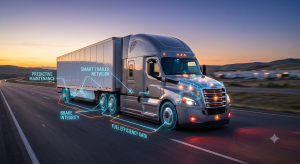
Protecting the truck is only half the battle, as trailer technology is also taking a giant leap forward. Meanwhile, advanced smart trailer platforms are expanding their operational footprint to offer deeper equipment intelligence. Modern sensors now monitor tire health, brake systems, and cargo area access simultaneously. Moreover, these setups can automatically flash high-visibility lighting patterns to alert nearby motorists of roadside hazards. Using these tools allows older fleets to achieve modern safety standards without purchasing entirely new assets. Ultimately, investing in connected technologies ensures that Class 6-8 combinations remain profitable and secure through 2026 and beyond.
Also read: Heavy Duty Durability: The New Kenworth C580 Truck

