

Maintaining Emergency Shutoff Valves on Tankers
Why Tankers Need Emergency Shutoff Valves
Emergency shutoff valves keep liquid cargo inside tank trucks during crashes. Federal safety rules require these valves on flammable liquid tankers to stop fuel spills fast.
If a crash breaks external pipes, the emergency valve stays shut inside the tank. This smart design stops thousands of gallons of gas from spilling onto public roads.
Fleet operators must test every remote cut-off switch often. Proper care keeps drivers safe and protects nearby drivers on the highway.
Federal Rules for Remote Tank Cutoffs
Federal hazmat safety rules require two quick-close switches on DOT 406 cargo tanks. According to PHMSA Regulations, workers must put manual levers on opposite ends of the tanker trailer.
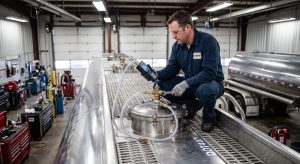
Mechanics must test steel cables and air lines during routine shop visits. Drivers must also check the emergency levers during daily pre-trip checks.
If a valve fails to close all the way, the tank truck cannot haul cargo. Mechanics must fix stiff cables and worn parts before the truck drives again.
Common Cable and Air System Problems
Dirt and road salt cause emergency shutoff cables to stick. Rust grows inside the steel cable housing over time and jams the release handle.
Air-powered emergency systems can also leak air around rubber seals. Low air pressure stops the valve spring from shutting the valve quickly in a crisis.
Part makers like Civacon build strong valves that work well in bad weather. Tank trailer builders like Heil Trailer install these valves on new liquid haulers.
Simple Shop Inspection Practices
Fleet shop teams should set up a clear inspection plan for all emergency valves. Mechanics should grease cable pivots and test cable pull strength at every oil change.
Techs must drain water from air tanks to keep wet air out of valve lines. Frozen water inside air lines can lock an emergency valve open in cold winter weather.
Following these easy safety steps keeps your fuel tankers safe on the road. Good shop habits stop costly roadside breakdowns and keep your fleet audit-ready.
Also read: A Guide to Managing Flammable Materials Truck Fleets

