

Maintaining Overfill Prevention Sensors on Fuel Tankers
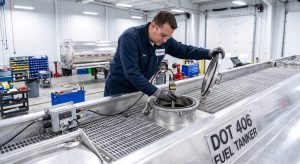
Preventing Overfill Spills at Fuel Racks
Overfill prevention sensors stop fuel tank trucks from overflowing during bulk loading. These optic sensors tell terminal loading pumps when fuel reaches max tank level.
If a sensor fails to send a signal, fuel can spill out of the tank compartment. A big fuel spill creates fire hazards, ground damage, and costly terminal downtime.
Fleet managers must check overfill sensor systems often. Good sensors protect drivers and keep fuel transport trucks running on time.
How Optic Sensor Tech Works
Modern fuel tankers use optic probes installed in the top of each compartment. These probes send light beams through a glass prism to spot rising fuel.
When fuel touches the sensor prism, the light beam breaks and signals the rack to stop pumping. Equipment makers like Civacon build strong optic probes for daily fuel hauling.
Smart monitors on the tanker frame connect directly to terminal shutoff cords. These monitors check that all tank compartments are safe before fuel flows.
Federal Rules for Fuel Tanker Loading
Federal hazmat safety rules require working overfill protection on DOT 406 tankers. According to PHMSA Regulations, carriers must keep all emergency shutoff tools in working order.
Drivers must plug in ground wires and rack cords before loading fuel. If the rack monitor spots a bad sensor, the loading rack locks out the tanker trailer.
According to FMCSA Safety Guidelines, motor carriers must fix bad sensors before sending trucks back to work. Drivers must never bypass overfill sensors to force a load.
Simple Shop Inspection Practices
Fleet mechanics should check overfill sensor probes during regular shop visits. Dirt, dark fuel residue, and grime can coat sensor prisms and cause false errors.
Techs should wipe probe prisms clean with soft cloths and approved cleaners. Mechanics must also check wiring plugs and clean rust off ground bolts.
Using durable equipment from trailer builders like Polar Tank Trailer helps stop sensor failures. Simple shop care ensures your fuel tankers pass rack tests and stay fully compliant.
Also read: Everything You Need to Know About Insurance for Your Trucking Business

