

Trailer Tracking Tech: Close the Visibility Gap
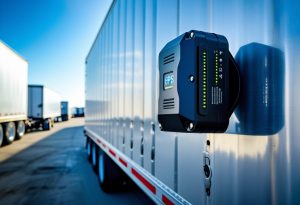
Trucks get all the attention. ELDs, dashcams, telematics — every device on your tractor tells you exactly what that driver is doing and where that truck is going. Yet when the driver unhooks the trailer and heads home, your visibility often disappears completely. That gap costs fleets real money, and as a new fleet manager, it is one of the first problems worth solving.
Trailer tracking technology has matured quickly. Today’s systems go well beyond a basic GPS ping. They combine location data, sensor inputs, and cloud-based software to give you a complete picture of every trailer in your network — whether it is rolling down the highway, sitting at a shipper’s dock, or collecting dust in a drop yard two states away.
What Trailer Tracking Actually Does
At its core, a trailer tracker is a GPS-enabled device mounted directly on the trailer. Unlike a truck’s telematics unit, a trailer tracker must work independently of any vehicle power supply. That means most units rely on battery power, solar charging, or a combination of both. They transmit location and status data over cellular networks on a schedule you configure, whether that is every few minutes or once a day.
Modern systems from providers like Phillips Connect and SkyBitz go further than location alone. Smart trailer platforms now integrate cargo sensors, tire pressure monitors, brake diagnostics, and door-open alerts. The result is what industry insiders call a “unified view” — one dashboard showing the health, location, and status of every trailer in your fleet.
Trailer Tracking vs. Truck Tracking
New fleet managers sometimes assume that tracking their trucks covers their trailers too. It does not — at least not when those trailers are unhitched. A tractor’s telematics system goes dark the moment a driver disconnects. Your trailer, meanwhile, might sit for days at a customer’s facility. You will not know when it arrived, how long it has been there, or whether it has moved at all.
This matters for several reasons. First, trailers represent significant capital. A new 53-foot dry van can cost $50,000 or more. Second, trailers are frequently stolen. According to data from Verisk CargoNet, cargo theft incidents involving trailers increased 18 percent year-over-year in 2025, with total losses surging to nearly $725 million. Furthermore, over 100,000 utility trailers are stolen in the U.S. annually, with recovery rates often below 30 percent. Those numbers should get your attention fast.
How Asset Utilization Gets Expensive Fast
Beyond theft, underutilization is the quieter problem. You might have 20 trailers in your fleet but only 12 actually working on any given day. The other eight are sitting idle at customer docks, forgotten in remote drop yards, or waiting for repairs. Each idle trailer still costs you money in lease payments, insurance, and depreciation.
Geotab’s trailer utilization research offers a straightforward formula. Divide your total monthly hours of active trailer use by the total available working hours for your fleet. The result is your utilization rate. Most fleets have room to improve. In fact, research from Phillips Connect shows that improving utilization by even one percent can allow a 10,000-trailer fleet to eliminate 100 trailers from its inventory. That is 100 fewer trailers to purchase, insure, and maintain.
As a new manager running a smaller fleet, the principle still applies. Better visibility leads directly to better deployment decisions, which means more loads moved with fewer assets.
The Role of Geofencing
Geofencing is one of the most practical features inside any trailer tracking platform. A geofence is simply a virtual boundary drawn around a specific geographic location — a customer facility, a drop yard, a freight hub, or even a restricted zone. When a trailer enters or exits that boundary, you receive an automatic alert.
Teletrac Navman’s trailer tracking buyer’s guide notes that geofencing also helps manage detention charges. Detention fees kick in when a trailer sits at a shipper or receiver beyond the agreed-upon free time window. Without tracking, you are relying on drivers or customers to report dwell times. With geofencing, you have timestamped, objective records of exactly when a trailer arrived and when it left. That data is useful when it is time to invoice a customer or dispute a charge.
You can also set geofences around your own yard to trigger automated yard check reports. Instead of physically walking the yard every morning, your platform generates a virtual inventory of which trailers are present, which have left, and which are due for dispatch.
Smart Sensors: The Next Layer
Basic GPS location is table stakes. The real value comes when you layer in sensor data. Today’s smart trailer platforms can monitor tire pressure and temperature, brake system performance, cargo door open/close events, and even interior cargo volume.
Phillips Connect’s CargoVision system, for example, uses a rear-mounted camera to estimate how full a trailer is and predict unload times. That kind of intelligence helps dispatchers make smarter decisions about which trailer to send where, reducing wasted trips and improving turnaround times.
Solar-powered tracker options are also worth knowing about. Units like Phillips Connect’s SolarNet are designed for long-term, untethered deployment on trailers that go weeks without being connected to a truck. They deliver consistent location updates without the need for battery swaps or hardwiring.
Theft Prevention in a High-Risk Environment
Trailer theft is no longer a local problem. According to the American Trucking Associations, cargo thieves are using increasingly sophisticated methods — including fake identities and double-brokering scams — to steal entire shipments. California, Texas, and Illinois account for nearly half of all cargo theft incidents, but activity is expanding to historically lower-risk regions.
A connected trailer is a harder target. Real-time movement alerts notify you the moment a trailer leaves a geofenced area during non-operating hours. Tamper-alert door sensors flag unauthorized access. Some platforms even offer covert, solar-powered tracking devices designed to be hidden inside the trailer frame, so a thief cannot easily locate and disable them.
Some specialty insurers now offer better rates to fleets that can demonstrate active GPS beacons and tamper-alert door locks. So trailer tracking is not just a loss-prevention tool — it can directly reduce your insurance costs.
Choosing the Right System for Your Fleet Size
Not every fleet needs the same solution. Small fleets of one to 25 trailers benefit most from straightforward GPS tracking with essential features: real-time location, geofencing, and basic alerts. Cost-effective, easy-to-install systems with minimal maintenance requirements are the right fit at this stage.
Mid-size operations running 25 to 100 trailers need more. Detailed reporting, integration with your transportation management system (TMS), and advanced analytics become important as complexity grows. Platforms like Samsara, Verizon Connect, and Motive all offer trailer tracking as part of broader fleet management ecosystems, which simplifies the technology stack if you already use their truck telematics.
Hardware is equally important to consider. Battery-powered trackers work well for trailers that disconnect frequently. Solar-powered units are better for assets that spend long periods away from a power source. Hardwired options offer continuous power but require more installation effort.
Getting Started Without Overthinking It
Trailer tracking does not have to be a massive project. Start by identifying your most valuable trailers or the ones most likely to sit idle. Pilot a basic GPS tracking solution on that group first. Use the location and dwell-time data to benchmark your current utilization rate before making any changes.
Once you have a baseline, you will quickly see where trailers are getting stuck and why. From there, adding features like geofencing alerts and cargo sensors becomes a natural next step, not a leap in the dark.
Your trucks already have a voice. It is time to give your trailers one too.
Also read: Wabash Unveils New TrailerHawk AI Cargo Security Tech

