

DOT Roadside Inspections: What to Expect and Do
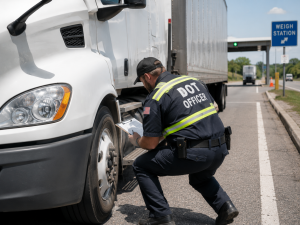
Roadside inspections are a fact of life in commercial trucking. They happen at weigh stations, rest areas, and during ordinary traffic stops. They can occur at any time and almost never come with advance notice. For a new fleet manager, the best preparation you can do happens long before an inspector ever walks up to one of your trucks.
Who Conducts These Inspections
DOT roadside inspections are conducted by state and federal enforcement officers working under FMCSA guidelines. The Commercial Vehicle Safety Alliance — known as CVSA — sets the standardized inspection criteria that officers follow across North America. These inspections assess both driver and vehicle compliance with Federal Motor Carrier Safety Regulations. Fleetworthy
The outcome of every inspection goes directly into the FMCSA’s system. Violations affect your CSA score and stay on your record for two full years.
The Six Levels of Inspection
Not every inspection is the same. CVSA defines six levels, and knowing the difference helps you understand what your drivers may encounter. Level I and Level II account for the vast majority of roadside encounters. FleetRabbit
A Level I inspection is the most thorough. It is a full examination of both the driver’s documentation and the vehicle itself. Officers check brakes, tires, lights, coupling devices, fuel systems, exhaust, and more. A Level II inspection covers the same areas but without the officer going under the vehicle. A Level III inspection focuses on the driver only — credentials, medical certificate, hours of service records, and seatbelt use.
What Inspectors Check Most
The FMCSA publishes violation data showing brake defects as the most common violation category, cited on roughly 15 to 20 percent of inspected vehicles. Lighting violations occur on 10 to 15 percent of inspected vehicles. Hours of service violations appear on 8 to 12 percent of inspected vehicles. Tire violations affect 8 to 10 percent of inspected vehicles. FleetRabbit
These are all preventable. They show up because of deferred maintenance, skipped pre-trip inspections, or poor driver documentation habits. Consequently, fixing these areas is where your preparation effort should be focused.
In 2025, CVSA inspectors examined 56,178 commercial vehicles during the International Roadcheck and placed 22.6% out of service. Brakes, tires, and lights accounted for over 75% of those violations — all preventable with proper maintenance and inspection preparation. FleetRabbit
What Drivers Must Have in the Cab
Driver documentation is checked on nearly every inspection. Medical certificates must be current and carried at all times. Inspectors verify this immediately during a roadside stop. Electronic logbooks or approved paper logs are required, and records must be current, accurate, and match vehicle operation. Discrepancies trigger violation citations. FleetRabbit
Additionally, every vehicle must have a user manual showing law enforcement how to use the ELD. Paper logs must also be in the vehicle so that, in the event of a malfunction, a driver can begin paper logs to remain compliant. Kellerencompass
Brief your drivers on these requirements regularly. Missing documentation triggers violations regardless of whether the driver is actually doing everything correctly.
How Violations Are Recorded
Every violation documented during a roadside inspection is uploaded to the FMCSA’s system, where it contributes to your CSA score. A single violation, even if minor, can trigger more frequent inspections, fines, out-of-service orders, and long-term reputational damage. Fleetworthy
Furthermore, patterns of violations trigger Fleet Safety Audit investigations that examine your complete operational practices. In other words, a few bad inspections in a short period can bring a much larger review of your entire operation. FleetRabbit
Prepare Before the Inspector Arrives
The most effective strategy is building inspection readiness into your daily operations. Practicing inspections internally builds confidence and uncovers weaknesses before the DOT finds them. Have safety personnel or third-party auditors conduct surprise mock inspections using CVSA criteria. Treat any internal findings as if they were real violations, log and resolve issues, and use findings to refine training and maintenance protocols. Fleetworthy
Review your FMCSA SMS data monthly. Look for patterns in your inspection history. Address repeat violation categories with targeted driver coaching and maintenance scheduling adjustments.
The CVSA publishes its inspection criteria publicly, so there are no surprises about what officers look for. Start there: https://www.cvsa.org/inspection-certification/north-american-standard-inspection-program/
Also read: Tire Violations Follow the Thermometer — Why Summer Is Your Riskiest Season

