

Preventing Tanker Rollovers with Brake Inspections
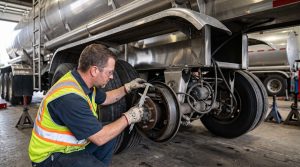
Stopping a heavy hazmat tank trailer requires huge braking power. Worn brake shoes increase stopping distance during an emergency stop. Mechanical failures mixed with heavy liquid surge often cause dangerous jackknife crashes.
Heavy Liquid Surge Increases Stopping Risk
Hazmat tank trailers carry heavy liquid loads that shift forward when braking. Forward liquid movement adds thousands of pounds of force against the front tank wall. Liquid surge forces the braking system to work much harder to stop the truck.
When brake shoes are thin, the trailer cannot slow down as fast as the tractor cab. This speed difference pushes the tractor sideways and causes the driver to lose control. Federal safety rules from the FMCSA Cargo Tank Regulations urge carriers to check brake stroke before every trip.
Brake Defects Cause Most Cargo Tank Rollovers
Safety inspection data shows that brake defects cause over half of all tanker rollovers. Weak brakes force drivers to swerve during sudden highway slowdowns. Swerving with a shifting liquid load quickly tips the trailer onto its side.
Mechanics must check brake pads, air lines, and slack adjusters during every service visit. Equipment suppliers like Bendix Commercial Vehicle Systems make automatic slack adjusters that keep brake stroke within legal limits. Replacing worn brake parts early protects drivers and prevents severe rollover crashes.
Routine Axle Maintenance Ensures Road Safety
Fleet safety directors must enforce strict inspection schedules for every active trailer. Technicians should measure brake stroke during routine shop service and check air lines for leaks. Catching small air leaks early keeps system pressure high for emergency stops.
Good record keeping helps fleet managers track part wear across all trailer axles over time. Clear maintenance logs prove to federal inspectors that your fleet stops mechanical risks. Keeping good brakes on heavy cargo tanks keeps drivers safe and fully compliant with national transport rules.
Also read: Tires and Brakes Are Still Grounding Fleets in 2026

