

Lytx Report: Big Wins, But Distraction Is Surging
The Good News Fleet Managers Have Earned
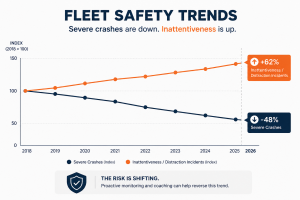
After years of steadily worsening collision numbers following the pandemic, the 2026 data is finally offering some relief. Lytx released its 2026 Road Safety Report in March, drawing from more than 341 billion miles of commercial driving data — and the headline finding is genuinely encouraging. The rate of severe crashes per mile fell 4 percent, and moderately severe collisions dropped a substantial 41 percent. Near collisions fell 23 percent from last year’s all-time high. These are not small shifts. They reflect years of investment in video telematics, coaching programs, and driver training actually paying off at scale.
The National Safety Council reinforced the positive trend, estimating a 12 percent reduction in overall motor vehicle fatalities in 2025, even as Americans drove a record number of miles. For fleet managers who have spent years building safety cultures and defending technology budgets, this data offers meaningful validation.
The Warning Buried in the Numbers
The progress on severe crashes, however, sits alongside a troubling countertrend that demands attention. Inattentiveness as a contributing risk factor jumped 168 percent year over year. Minor collisions rose 5 percent and low-severity incidents climbed 16 percent. Near-miss events, while down from their all-time peak, remain elevated. The construction sector faces a particularly urgent situation, with overall collisions up 28 percent year over year — the steepest spike of any industry in the report.
Chris Cabrera, CEO of Lytx, was direct about what the data means in the company’s press release: the victories secured are significant, but the formidable risks that persist require sustained collective action. The report reinforces that severe crash reduction and minor collision growth can happen simultaneously — because they have different causes. Severe crashes often involve speed and impairment. Minor collisions and near-misses are frequently driven by inattention, distraction, and the low-level cognitive fatigue that builds over a long shift.
Where and When Risk Is Highest
Geography and timing matter in ways fleet managers can use operationally. The report identifies the four riskiest U.S. roadways as concentrated near major airports, where high vehicle density, erratic lane changes, and unfamiliar routes compound urban driving hazards. Furthermore, July consistently ranks as the deadliest month in the Lytx dataset — a finding worth building into summer scheduling and coaching calendars right now.
Fog deserves special mention. The report found that fog makes severe crashes nearly three times more likely. For fleets operating in fog-prone regions or running early morning shifts, that statistic should inform both dispatch decisions and driver training content.
What Fleet Managers Should Do With This Data
The 168 percent surge in inattentiveness is the single most actionable finding in the report. It points directly at distracted driving as the dominant remaining risk after serious crash rates have improved. Fleets that have not yet deployed driver-facing cameras with AI-powered distraction detection are leaving their biggest current vulnerability unaddressed.
Equally important is the coaching data in the report. Lytx found that coaching efforts on device use surged 40 percent — and the connection between that coaching activity and declining severe crash rates is not coincidental. Fleets that make distraction coaching a structured, regular practice — not a reactive response to incidents — are the ones likely to show up in next year’s data on the right side of the trend lines.
The 2026 Road Safety Report is available for download directly from Lytx and includes interactive tools for exploring collision trends by industry, geography, and time of day.
Also read: Why Passive Dashcam Recording is No Longer Sufficient

