

Tariff Pressures and Recalls Shake Up Trailer Markets
Navigating the Volatile June 2026 Trailer Landscape
Navigating a volatile fleet landscape in mid-2026 requires continuous vigilance over supply chain shifts. Consequently, trailer procurement strategies are facing a dual threat from regulatory trade policies and sudden safety recalls. Specifically, new anti-dumping investigations and manufacturing defects are forcing fleet managers to alter their buying habits. Therefore, operations teams must re-evaluate their equipment timelines to shield themselves from rising equipment costs.
Trade Duties Drive Up Dry Van Sourcing Costs
Securing new dry van trailers has become notably more expensive due to aggressive federal trade intervention. On June 3, the U.S. Department of Commerce delivered an affirmative preliminary determination in an ongoing countervailing duty case. The American Trailer Manufacturers Coalition successfully argued that foreign governments are unfairly subsidizing their van-type trailer exports.
As a result, customs authorities will begin collecting cash deposit duties on imported trailers and component subassemblies from China and Mexico. Furthermore, these tariffs will heavily penalize components that route through intermediate transit countries like Canada. These strict protectionist rules aim to level the domestic playing field for manufacturers like Great Dane and Stoughton. However, carriers will ultimately bear the brunt of these supply-side penalties through higher acquisition costs.
Addressing the Urgent Wabash Underride Guard Recall
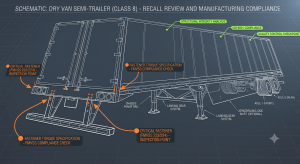
Safety managers must immediately pivot their attention toward active safety compliance risks alongside trade issues. Wabash recently issued an urgent safety recall for over 900 dry van trailers from its 2027 model year lineup. The affected equipment includes trailers manufactured between April 20 and June 5, 2026.
According to the official National Highway Traffic Safety Administration filing, a supplier failed to torque rear underride guard bolts correctly. Moreover, this structural defect significantly reduces the protection provided during a rear-end collision. Consequently, these units fail to meet Federal Motor Vehicle Safety Standards for rear impact protection. Dealers will retighten the loose bumper tube bolts completely free of charge to resolve the compliance risk.
Managing Production Realities and Fleet Replacements
Despite these regulatory and safety headwinds, baseline equipment demand remains remarkably resilient. The latest FTR commercial vehicle outlook report shows that U.S. trailer net orders outperformed normal seasonal expectations in late spring. Nevertheless, market analysts emphasize that this current demand reflects a delayed replacement cycle rather than fleet capacity expansion.
Meanwhile, overall manufacturing output fell by 6 percent as trailer builders manage build slots conservatively. Thus, fleet owners face longer lead times and tighter allocation slots if they postpone their replacement orders. Ultimately, balancing safety compliance and tariff-driven pricing will define successful trailer lifecycle management through 2026.

